Fifteen minutes from Farm El Baya, in the Medjerda river valley, Testour is one of the most unusual towns in Tunisia. It was built in the early 1600s by Andalusian Muslims expelled from Spain, and four centuries later that heritage still lives in its architecture, its music, and its festivals. This guide covers what to see, when the festivals happen, and how to fold Testour into a farm stay.
A piece of Andalusia in the Medjerda valley
When Spain expelled its last Muslim communities after 1609, thousands of families crossed the Mediterranean and rebuilt their lives in northern Tunisia. Testour is their most complete creation: a town laid out on Andalusian lines, with tiled roofs, arched doorways, and brick minarets that would not look out of place in southern Spain.
It is still a living country town rather than a museum - which is exactly why it rewards a slow visit. Wander the main street, look up at the rooflines, and glance into the courtyards when a door stands open.
The Great Mosque and its backwards clock
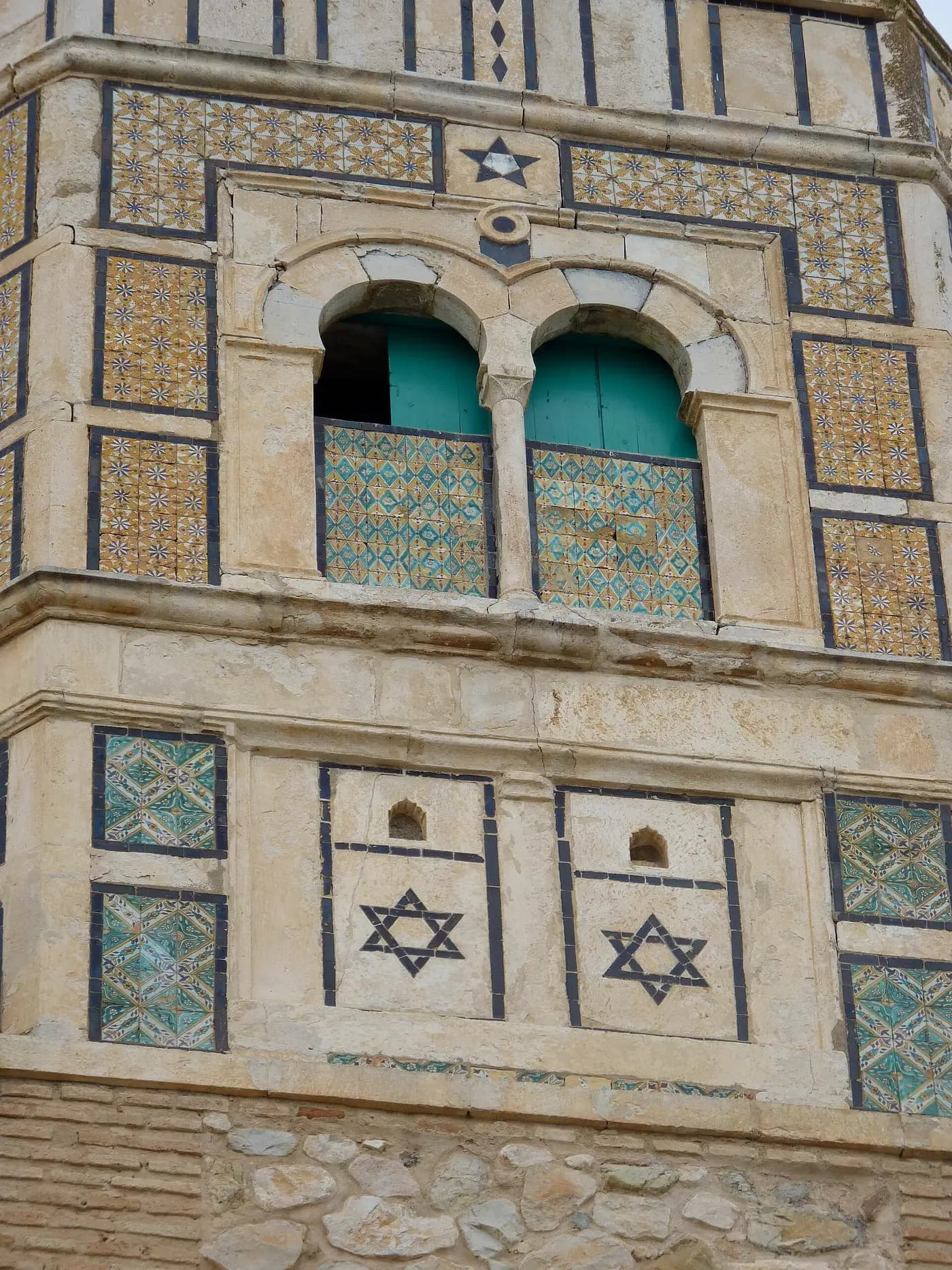
Testour's landmark is its Great Mosque, built in the seventeenth century by the Andalusian settlers - look for the Stars of David worked into the minaret's tiles, a nod to the Jewish community that helped build the town. Then look closely at the clock: its face runs counter-clockwise, one of the very few clocks in the world that run backwards. Nobody is entirely sure why - the theories range from nostalgia for a lost homeland to a craftsman's signature - and after decades stopped, it was restored to working order in 2014 by a descendant of the town's Andalusian families.
Pomegranates, markets, and malouf
Testour's pomegranates are famous across Tunisia, and the town celebrates them with a festival in late October when the harvest comes in. Each July, Testour hosts its International Festival of Malouf - the Andalusian classical music the exiles carried with them, and Tunisia's oldest festival devoted to it - filling summer evenings with music.
The weekly market is the best way to see the town at work. For a meal out, Le Malouf in Testour is a good address, and Les Vergers des Montagnes, fifteen minutes away, is worth reserving a day ahead.
Make it a half-day from the farm
Testour is the easiest outing from Farm El Baya - fifteen minutes by car, or the first stop on the private guided day that continues to the Roman city of Dougga. The combined Testour and Dougga tour is 250 DT / €74 per stay for the whole booking. The small grocery shops in town also make Testour the practical stop if you plan to cook in the farm's two kitchens.
Where to stay near Testour
Farm El Baya sits in the countryside at Slouguia, fifteen minutes from town - a working permaculture farm with a single private room, the Baya Room, from 180 DT per night, with farm breakfast available each morning. Time your stay to the pomegranate festival and you can pick fruit on the farm the same weekend.
Photo: Bellyglad, CC BY 2.0, via Wikimedia Commons